BMI Calculator
Body Mass Index from height and weight (adult screening tool).
BMI is a screening measure only. For personal health advice, speak with a qualified professional.
Body Mass Index, or BMI, is the most widely used screening number for classifying weight status in adults. This calculator turns your height and weight into a single BMI value in seconds, then places it into the standard World Health Organization categories — underweight, normal weight, overweight, and obesity — so you can see where you currently stand.
BMI is popular because it only needs two easy-to-measure inputs, yet it correlates reasonably well with health risk across large populations. It is not a diagnosis. Think of it as a quick screening tool that tells you whether a closer look — body composition testing, waist circumference, or a conversation with a doctor — is worth scheduling. On Calculators (calculators.com.pk), the calculator runs entirely in your browser, so your height and weight are never uploaded anywhere.
On this page
The BMI Formula, Explained
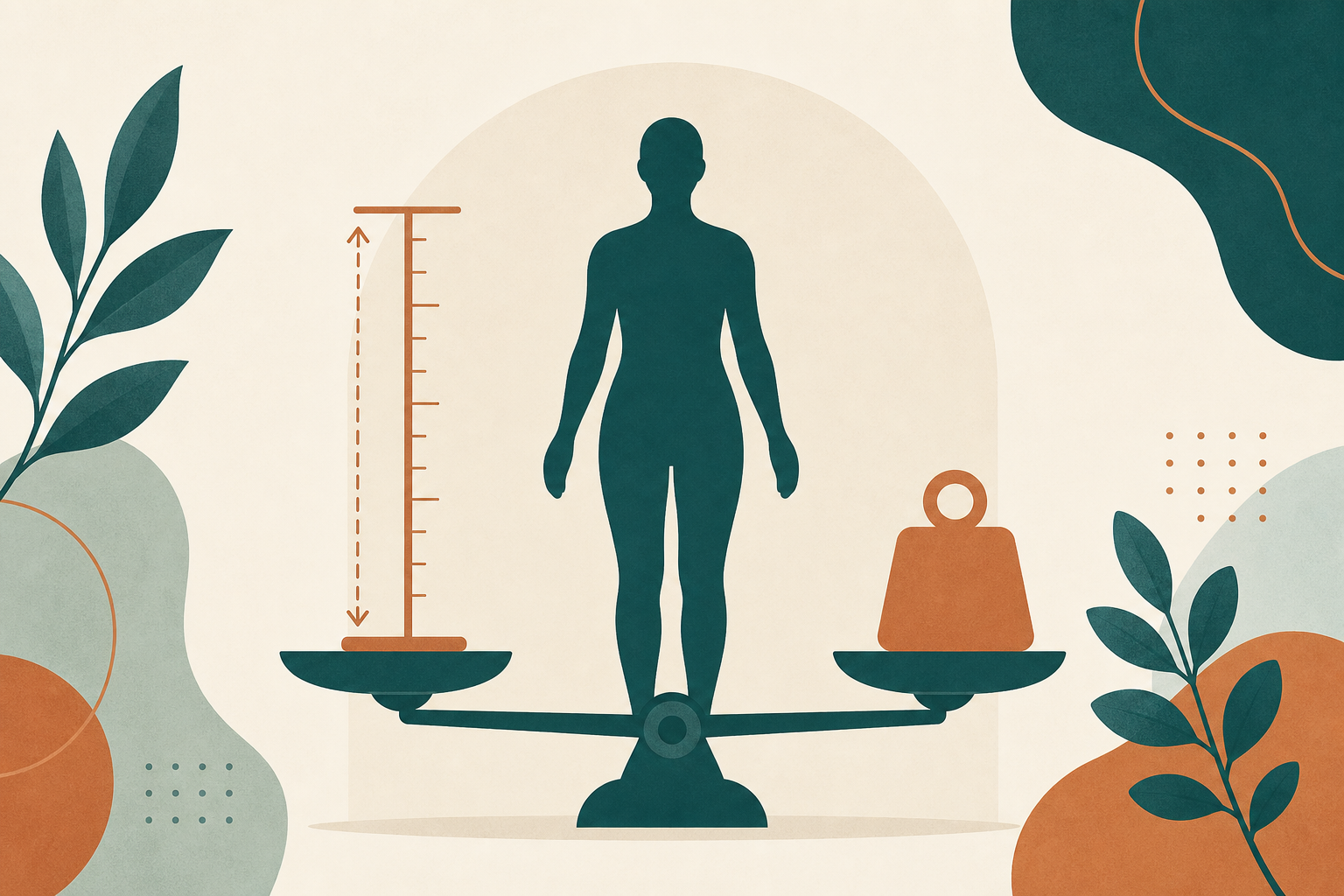
BMI is calculated by dividing your weight in kilograms by the square of your height in metres: BMI = weight (kg) ÷ height (m)². If you enter measurements in pounds and inches, the calculator converts them internally using BMI = 703 × weight (lb) ÷ height (in)², which lines up with the metric formula, just rescaled for imperial units.
For example, a person who is 1.70 m tall and weighs 68 kg has a BMI of 68 ÷ (1.70 × 1.70) = 68 ÷ 2.89 ≈ 23.5, which falls in the normal weight range. Because height is squared, small errors in measuring height change the result more than an equivalent error in weight — always measure standing straight, without shoes, for the most reliable number.
WHO BMI Categories for Adults
For adults aged 20 and over, the World Health Organization and most national health bodies use the same broad bands regardless of sex, which makes BMI easy to compare across a population even though it does not adjust for individual body composition.
- Below 18.5 — Underweight
- 18.5 to 24.9 — Normal weight
- 25.0 to 29.9 — Overweight
- 30.0 to 34.9 — Obesity (Class I)
- 35.0 to 39.9 — Obesity (Class II)
- 40.0 and above — Obesity (Class III)
These ranges are population-level guides used for screening and public-health tracking, not fixed thresholds for any one person’s health status.
What BMI Does Not Measure
BMI cannot tell the difference between muscle, fat, bone, and water weight. A muscular athlete or a dedicated strength-training enthusiast can register as “overweight” on the BMI scale while carrying very little body fat, simply because muscle tissue is denser than fat tissue. Conversely, an older adult who has lost muscle mass with age can have a “normal” BMI while still carrying a higher percentage of body fat than is healthy — a pattern sometimes called “normal-weight obesity.”
BMI also does not account for sex-based differences in typical body composition, ethnicity-linked variation in health risk at a given BMI, pregnancy, or frame size. That is why many clinicians pair BMI with waist circumference or a body-fat estimate — such as our Body Fat Calculator — before drawing conclusions about an individual’s health.
Using Your BMI Result Wisely
If your BMI falls outside the normal range, treat it as a prompt to look closer rather than a final verdict. Track your BMI alongside waist size, resting energy levels, blood pressure, and how your clothes fit over months, not days — body weight naturally fluctuates by a kilogram or more because of water retention, food volume, and hormonal cycles.
If you are planning a change in body weight, our Calorie Calculator and BMR Calculator can help you estimate a realistic daily energy target, and the Ideal Weight Calculator offers additional reference ranges based on height alone.
Comparing BMI Across a Population vs Your Own Trend
BMI was originally devised by the Belgian mathematician Adolphe Quetelet in the 1830s as a statistical tool for studying average body proportions across large populations, not as a diagnostic test for any one individual. Public health researchers still rely on it heavily today because it is cheap to collect at scale and correlates reasonably well with average disease risk across thousands or millions of people.
For an individual tracking their own health, the single most useful way to use BMI is as a personal trend line rather than a one-off snapshot. Recalculate it every few weeks using the same scale and measuring technique, and watch the direction of travel alongside other markers such as waist circumference, resting heart rate, and how your regular clothes fit — a slow, steady trend usually tells you more than any single reading.
Medical Disclaimer
This tool is for general screening and education only. It is not a medical device and does not replace advice from a doctor, dietitian, or other qualified health professional — especially if you are pregnant, under 18, managing a chronic condition, or taking medication that affects weight or metabolism.